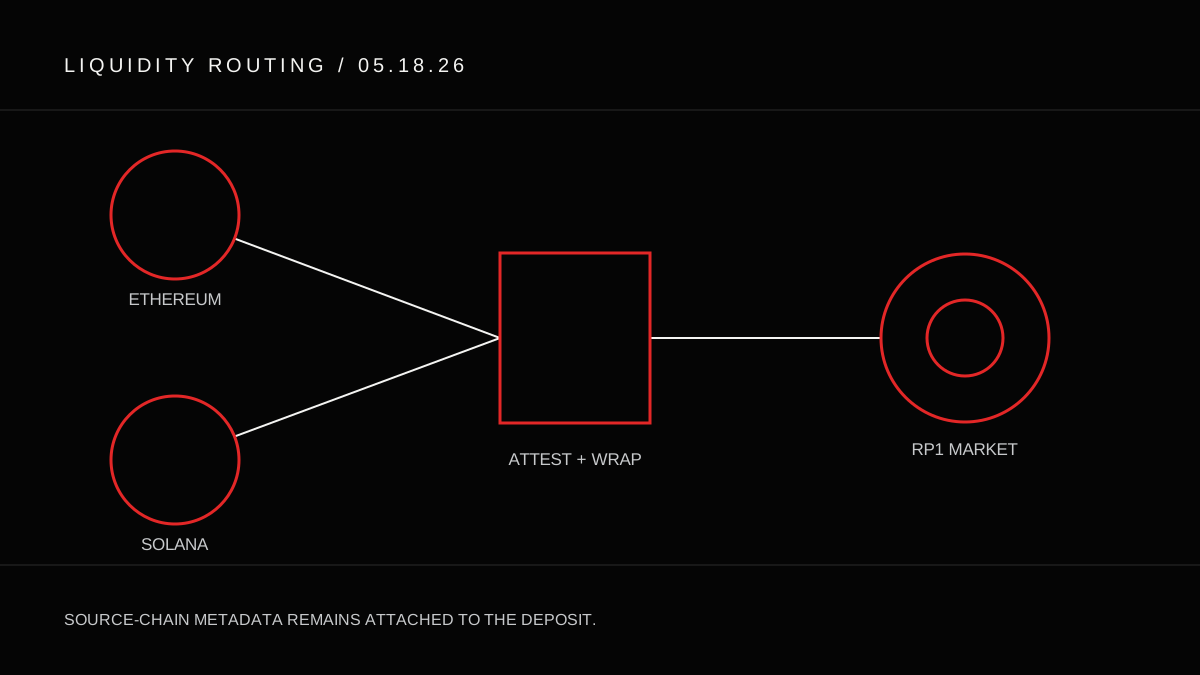
Cross-chain liquidity breaks easily when the destination sees tokens but loses the story of how they arrived.
This release adds Ethereum liquidity deposits and carries Solana deposit metadata through the InstaWrap flow. RP1 can now preserve the source-chain context needed to route those assets into the intended market instead of treating every wrapped balance as interchangeable input.
The accounting path
A deposit is observed on its source chain, attested, wrapped into the RP1 representation, and associated with its liquidity intent. The destination module can validate the source metadata before admitting funds to a pool or market.
That last check is important. Cross-chain software often concentrates on message delivery and leaves product context to an offchain service. We want the chain transition to contain enough information to reject a malformed route on its own.
This work builds on the bridge and relayer hardening from March and April, including restart-safe vault cache hydration and explicit withdrawal funding. Those changes were not visible features, but they made the deposit path less dependent on a relayer’s transient memory.
Source record
- Ethereum liquidity depositspull request / 2026-05-18
- Solana deposit metadatapull request / 2026-05-18