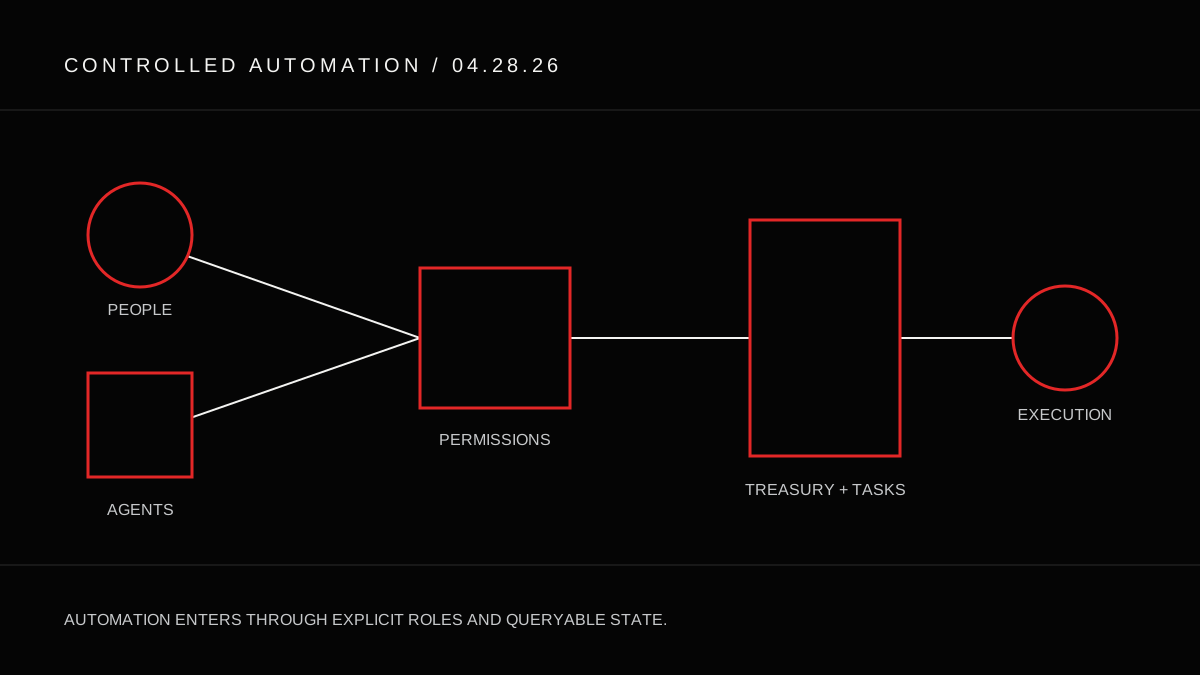
We have been treating agent features and institutional controls as one design problem: software should be able to act, but authority must stay visible.
The new enterprise treasury module adds chain-level controls for institutional workflows and validator onboarding. In parallel, the agent documentation now maps the actual transaction and query surfaces needed to register an agent, assign permissions, submit work, and inspect results.
This is less glamorous than saying an agent can do everything. It is also much more useful. A treasury operator needs to know which role approved a movement. An agent developer needs a stable message and query path. Both need failures that can be recovered without replaying work blindly.
Testing the path under load
We added a live, sequence-safe TPS benchmark mode and seeded workload tooling alongside the product work. The benchmark uses funded accounts and real signed transfers, so account sequence rules remain part of the test. Consensus delivery was then hardened for bursts that previously risked dropping work between batching and execution.
The benchmark was still an early capacity tool at this point, not the evidence framework we use today. That distinction matters. A rate printed by a load generator is not enough on its own; committed transactions and node health need to agree with it.
Source record
- Enterprise treasury modulepull request / 2026-04-28
- Agent onboarding documentationpull request / 2026-04-28
- Sequence-safe live benchmarkpull request / 2026-04-28
- Consensus delivery hardeningpull request / 2026-04-28